
Politics
Rate-Capping Proposal Sparks Controversy Over Local Governance

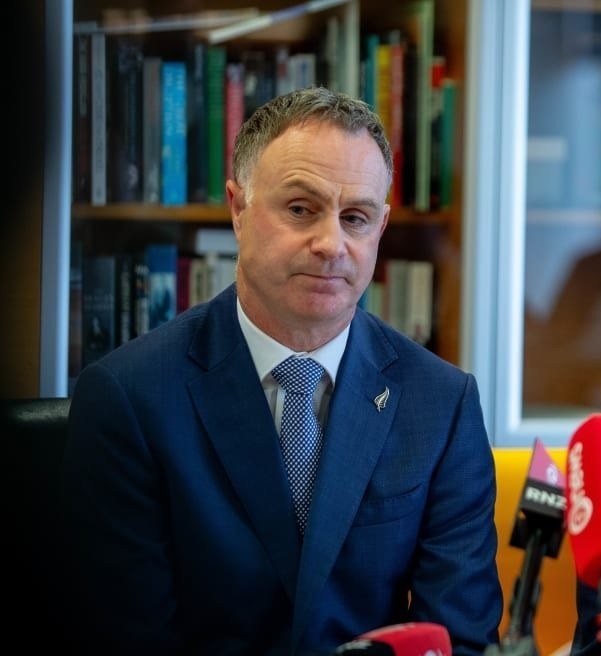
Prime Minister Christopher Luxon announced a new rate-capping proposal aimed at local government, a move that has drawn significant criticism for its implications on financial management and local governance in New Zealand. By likening city councillors to households struggling with budgeting, Luxon indicated that the government seeks to shift accountability for rising local taxes away from central authorities.
Critics argue that this approach conveniently overlooks the historical context of local government funding. In particular, the city of Dunedin, which once thrived due to substantial investments secured by a colonial government, serves as a case in point. The city’s development was not solely reliant on local rates but rather on external confidence from investors, a crucial factor that contributed to its growth in the 19th century.
As Chris Trotter, an Auckland writer and commentator, pointed out, the notion that local councils can sustain themselves solely through rate revenue reflects a lack of vision among current politicians. He emphasized that New Zealand’s infrastructure and amenities require a collaborative approach between national and local governments.
Luxon’s government, according to critics, embodies a pervasive pessimism and an aversion to risk that stifles innovative solutions for pressing local issues. The new rate-capping legislation, introduced by Simon Watts, may impose a cost-recovery model on local governments, leading to annual rate increases between 2% and 4%. This model raises concerns about the future of essential services and amenities that enhance the livability of New Zealand’s cities.
Trotter suggests that a more effective strategy would involve increasing the Goods and Services Tax (GST) and redistributing those funds to assist local councils in upgrading their infrastructure and services. He argues that borrowing costs for central government are lower than for local authorities, making it feasible to tackle large-scale projects, such as enhancing water supply systems, through a publicly owned corporation guided by local stakeholders.
The current approach, Trotter notes, reduces complex governance issues to simplistic narratives that fail to address the underlying needs of communities. Instead of fostering a shared vision for New Zealand’s future, the government’s stance appears focused on transactional politics, where donor interests take precedence over collective community welfare.
As the debate continues, it remains clear that the implications of Luxon’s rate-capping proposal extend beyond financial metrics, touching upon the very essence of how New Zealand manages its growth and resources. The challenge lies in balancing fiscal responsibility with the imaginative leadership required to navigate the complexities of modern governance.

US Federal Reserve Faces Divisions Over Interest Rate Cuts

Prince Harry Reflects on Royal Life with Humorous ‘Downton Abbey’ Comparison

McInnes Claims Qatar Off-Road Championship Title in Thrilling Finale

Challenge Your Vocabulary with Today’s Hard Word Quiz

Ngira Simmonds Critiques Leadership at Te Pāti Māori AGM

South Island Researcher Fights Cancer with Innovative Blood Test

One NZ Enhances Customer Service with 31 AI Agents

Kids Test Knowledge with Fun Kangaroo Quiz on December 7

Recognizing the Signs That Indicate You Need Iron Supplements

Test Your Knowledge: Take the Herald’s Afternoon Quiz Today

PM Faces Backlash from Fans During Netball Trophy Ceremony

Dunedin Designers Win Top Award at Hokonui Fashion Event

Experience the Excitement of ‘Chief of War’ in Oʻahu

Liam Lawson Launches New Era for Racing Bulls with Strong Start

Coalition Forms to Preserve Māori Wards in Hawke’s Bay

Walking Faster Offers Major Health Benefits for Older Adults

Disney Fan Reveals Dress Code Tips for Park Visitors

Scots Rally with Humor and Music to Protest Trump’s Visit
-
 World4 months ago
Test Your Knowledge: Take the Herald’s Afternoon Quiz Today
-
 Sports4 months ago
PM Faces Backlash from Fans During Netball Trophy Ceremony
-
 Lifestyle4 months ago
Dunedin Designers Win Top Award at Hokonui Fashion Event
-
 Entertainment4 months ago
Experience the Excitement of ‘Chief of War’ in Oʻahu
-
 Sports4 months ago
Liam Lawson Launches New Era for Racing Bulls with Strong Start
-
 World5 months ago
Coalition Forms to Preserve Māori Wards in Hawke’s Bay
-
 Health4 months ago
Walking Faster Offers Major Health Benefits for Older Adults
-
 Lifestyle4 months ago
Disney Fan Reveals Dress Code Tips for Park Visitors
-
 Politics4 months ago
Scots Rally with Humor and Music to Protest Trump’s Visit
-

 Top Stories5 months ago
UK and India Finalize Trade Deal to Boost Economic Ties
-

 Health2 months ago
Radio Host Jay-Jay Feeney’s Partner Secures Visa to Stay in NZ
-

 World5 months ago
Huntly Begins Water Pipe Flushing to Resolve Brown Water Issue