
Science
South Island Researcher Advances Cancer Detection with New Device

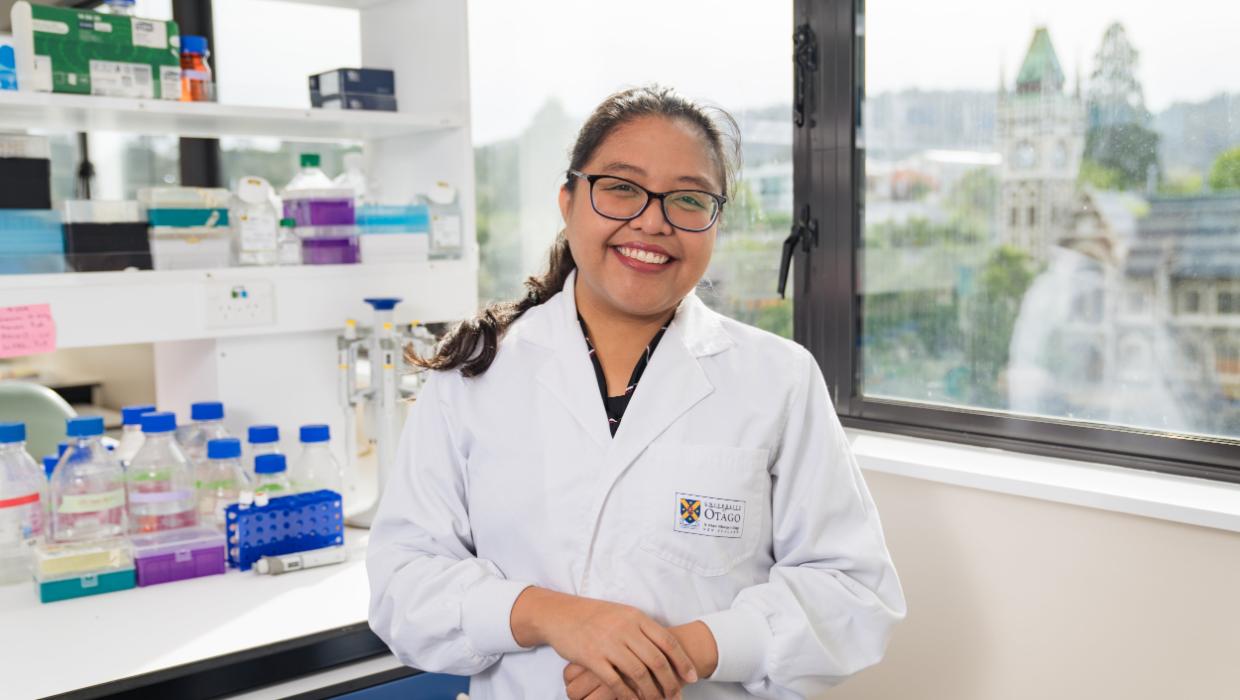
A childhood experience with a friend’s cancer diagnosis has inspired Dr. Judy Ann Cocadiz, a researcher at the University of Otago, to develop a groundbreaking tool for early cancer detection. Dr. Cocadiz has been awarded a three-year, $300,000 post-doctoral fellowship from the Cancer Society as part of its 2025 National Research Grant Round. This funding will support her innovative work focused on improving the accuracy of cancer diagnosis and monitoring.
Dr. Cocadiz’s research revolves around circulating tumour DNA (ctDNA), which consists of DNA fragments released into the bloodstream by cancer cells. The concentration of ctDNA is generally higher in patients with advanced cancer, providing a potential biomarker for early detection. To enhance diagnostic capabilities, Dr. Cocadiz is developing a small device intended to be inserted into a blood vessel. This device will act as a “sieve,” capturing ctDNA for a short period, which could enable physicians to identify cancers in their nascent stages and monitor for recurrence post-treatment.
Currently, the standard method for analyzing ctDNA involves drawing a blood sample from patients and examining it. Dr. Cocadiz explained, “Usually such a sample is only between 8-10 ml of blood. The problem is, in early-stage cancer, there is not a lot of ctDNA in 10 ml of blood. It is like looking for a needle in a haystack.”
To address this limitation, the new device aims to reduce the discomfort associated with blood draws, particularly for vulnerable populations such as children and elderly patients. “Taking a lot of blood from patients would not be ethical or physically good for the patient,” she noted. Instead, the device will collect ctDNA for a few minutes before being removed, providing a more efficient and less invasive alternative.
Although Dr. Cocadiz’s research is still in the proof-of-concept stage, she envisions the device functioning similarly to an intravenous (IV) line, being inserted into a patient’s blood vessel with ease. While bringing this innovative device to clinical use will require several years of development, she expressed optimism about her research trajectory. “I am really optimistic about where my research is heading,” she stated. “I am so grateful for this grant from the Cancer Society, because they are not just helping fund this research, but essentially the early stages of my career as well.”
A personal connection to cancer has driven Dr. Cocadiz’s commitment to this field. Growing up in the Philippines, her early interest in medicine was sparked when her best friend in preschool exhibited unusual bruising from minor injuries. Concerned for his well-being, she alerted her parents, leading to a doctor’s visit that resulted in a diagnosis of early-stage leukaemia. Fortunately, her friend received prompt treatment and has since recovered. Meeting him again earlier this year, Dr. Cocadiz was overjoyed to see him thriving.
After completing her PhD in biochemistry in 2022, Dr. Cocadiz shifted her focus from becoming a doctor to pursuing a career in cancer research. “Everything just kind of fell into place, and I am really glad I ended up in cancer research,” she reflected. Her work has the potential to significantly impact diagnostic practices and improve outcomes for cancer patients, making her a promising figure in the ongoing battle against this pervasive disease.

New Zealand Breakers Secure Playoff Spot with Key Victory

Two Injured in Jet Boat Collision on Tauwharenīkau River

Tasman Steel Reports $41 Million Loss Amid Rising Costs

Tasman Steel Reports $41 Million Net Loss Amid Rising Costs

News Fix Highlights Key Events Across News, Politics, and Sports

New Zealand’s Happiness Tied to Community Meals and Altruism

Auckland FC Triumphs Over Wellington Phoenix in Kiwi A-League Derby

Former Police Commissioner Claims Politicians Knew of Misconduct

Wellington’s Airhorn Show Delivers Unconventional Comedy Experience

Test Your Knowledge: Take the Herald’s Afternoon Quiz Today

PM Faces Backlash from Fans During Netball Trophy Ceremony

Dunedin Designers Win Top Award at Hokonui Fashion Event

Experience the Excitement of ‘Chief of War’ in Oʻahu

Liam Lawson Launches New Era for Racing Bulls with Strong Start

Coalition Forms to Preserve Māori Wards in Hawke’s Bay

Walking Faster Offers Major Health Benefits for Older Adults

Disney Fan Reveals Dress Code Tips for Park Visitors

Scots Rally with Humor and Music to Protest Trump’s Visit
-
 World4 months ago
Test Your Knowledge: Take the Herald’s Afternoon Quiz Today
-
 Sports4 months ago
PM Faces Backlash from Fans During Netball Trophy Ceremony
-
 Lifestyle4 months ago
Dunedin Designers Win Top Award at Hokonui Fashion Event
-
 Entertainment4 months ago
Experience the Excitement of ‘Chief of War’ in Oʻahu
-
 Sports4 months ago
Liam Lawson Launches New Era for Racing Bulls with Strong Start
-
 World5 months ago
Coalition Forms to Preserve Māori Wards in Hawke’s Bay
-
 Health4 months ago
Walking Faster Offers Major Health Benefits for Older Adults
-
 Lifestyle4 months ago
Disney Fan Reveals Dress Code Tips for Park Visitors
-
 Politics4 months ago
Scots Rally with Humor and Music to Protest Trump’s Visit
-

 Top Stories5 months ago
UK and India Finalize Trade Deal to Boost Economic Ties
-

 Health2 months ago
Radio Host Jay-Jay Feeney’s Partner Secures Visa to Stay in NZ
-

 World5 months ago
Huntly Begins Water Pipe Flushing to Resolve Brown Water Issue