
Science
Breakthrough Cancer Research Inspired by Childhood Friend’s Battle

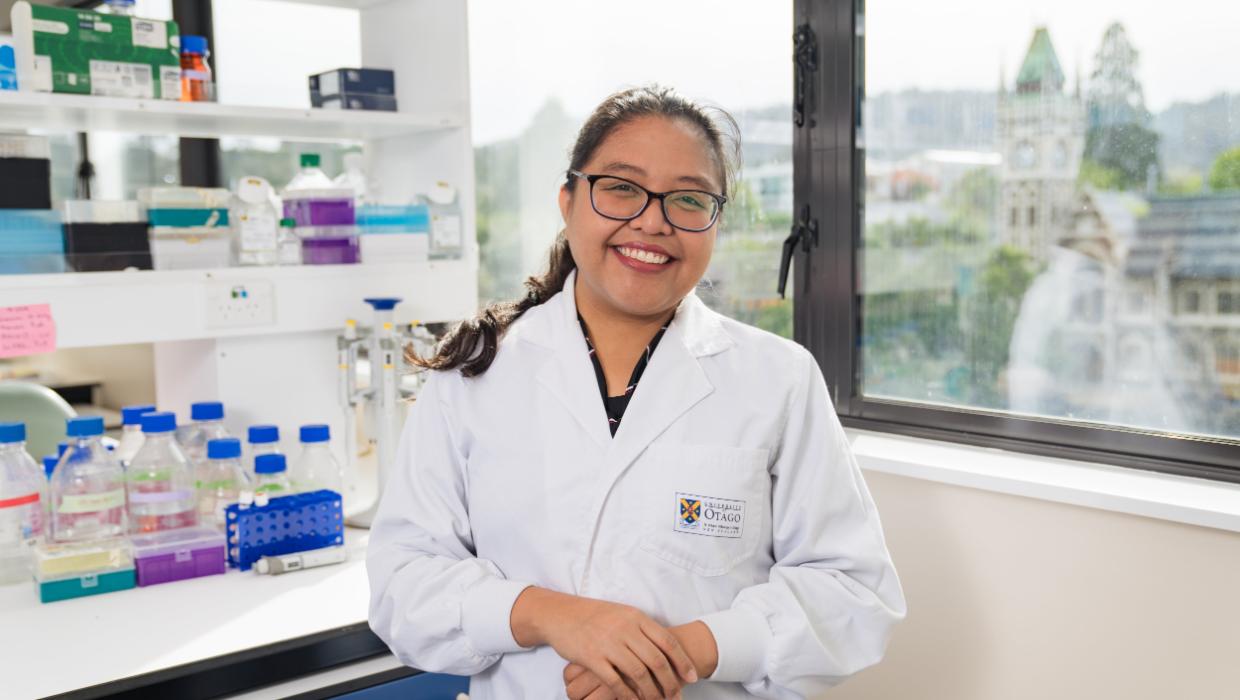
A childhood friend’s battle with cancer has inspired Dr. Judy Ann Cocadiz, a researcher from the University of Otago, to pursue groundbreaking work that could enhance the accuracy of early-stage cancer diagnoses. Cocadiz has received a three-year, $300,000 post-doctoral fellowship from the Cancer Society’s 2025 National Research Grant Round to support her innovative research focusing on circulating tumour DNA (ctDNA).
Cocadiz’s research targets ctDNA, which consists of small DNA fragments released into the bloodstream by cancer cells. The concentration of ctDNA typically increases with the advancement of cancer, making it a valuable biomarker for diagnosis. Her project involves developing a small device designed to be inserted into a blood vessel, functioning as a “sieve” to capture ctDNA over a brief period.
Innovative Device for Improved Diagnosis
Currently, the standard method for analyzing ctDNA involves drawing blood from patients and examining the sample. Cocadiz explained that in early-stage cancer, the amount of ctDNA found in a typical blood sample—around 8-10 ml—is often insufficient for accurate diagnosis. “It is like looking for a needle in a haystack,” she remarked, emphasizing the challenge posed by low ctDNA levels.
To address this issue, Cocadiz aims to create a device that collects ctDNA without requiring larger blood samples. The device would be inserted into a patient’s blood vessel, allowing it to gather ctDNA for a few minutes before removal. This approach not only minimizes discomfort for patients but also promises to facilitate earlier and more precise cancer diagnoses.
Though still in the proof-of-concept stage, the device is envisioned to operate similarly to an intravenous (IV) line, making it an accessible tool for healthcare providers. Cocadiz expressed cautious optimism about the project’s future, acknowledging that clinical implementation may take several years. “I am really optimistic about where my research is heading,” she stated, while expressing gratitude for the grant from the Cancer Society. “They are not just helping fund this research, but essentially the early stages of my career as well.”
Personal Motivation and Career Path
Cocadiz’s interest in cancer research began during her childhood in the Philippines. At just five years old, she noticed that her best friend frequently had large bruises from minor accidents. Concerned, she alerted her parents, who subsequently consulted the friend’s family. This led to a diagnosis of early-stage leukemia, allowing the child to receive timely treatment. Reuniting with her friend earlier this year, Cocadiz was pleased to see him healthy and thriving.
After completing her PhD in biochemistry last year, Cocadiz realized that while she did not want to pursue a career as a medical doctor, she could still make a meaningful impact in the fight against cancer. “Everything just kind of fell into place, and I am really glad I ended up in cancer research,” she reflected.
As Dr. Cocadiz continues her work, her research holds the potential to transform how early-stage cancers are detected and monitored, offering hope to countless patients and their families.

Qatar Showcases Thriving Real Estate Market at LPS Shanghai 2025

Global News Highlights for December 8, 2025: Key Updates

Australian Mother Chloe Mowday in Critical Condition After Surgery

Sam Ruthe Shatters 1500m Record at New Zealand Championships

Lifeguards Rescue Three Swimmers from Rip Current at Bethells Beach

Government Unveils Major Overhaul of Resource Management Act

Government Set to Reveal Major Overhaul of Resource Management Act

News Fix Highlights Key Events Across Politics, Business, and Sports

Navigating Relationships: Insights from Single Men in Their 60s

Test Your Knowledge: Take the Herald’s Afternoon Quiz Today

PM Faces Backlash from Fans During Netball Trophy Ceremony

Dunedin Designers Win Top Award at Hokonui Fashion Event

Experience the Excitement of ‘Chief of War’ in Oʻahu

Liam Lawson Launches New Era for Racing Bulls with Strong Start

Coalition Forms to Preserve Māori Wards in Hawke’s Bay

Walking Faster Offers Major Health Benefits for Older Adults

Disney Fan Reveals Dress Code Tips for Park Visitors

Scots Rally with Humor and Music to Protest Trump’s Visit
-
 World4 months ago
Test Your Knowledge: Take the Herald’s Afternoon Quiz Today
-
 Sports4 months ago
PM Faces Backlash from Fans During Netball Trophy Ceremony
-
 Lifestyle4 months ago
Dunedin Designers Win Top Award at Hokonui Fashion Event
-
 Entertainment4 months ago
Experience the Excitement of ‘Chief of War’ in Oʻahu
-
 Sports4 months ago
Liam Lawson Launches New Era for Racing Bulls with Strong Start
-
 World5 months ago
Coalition Forms to Preserve Māori Wards in Hawke’s Bay
-
 Health4 months ago
Walking Faster Offers Major Health Benefits for Older Adults
-
 Lifestyle4 months ago
Disney Fan Reveals Dress Code Tips for Park Visitors
-
 Politics4 months ago
Scots Rally with Humor and Music to Protest Trump’s Visit
-

 Top Stories5 months ago
UK and India Finalize Trade Deal to Boost Economic Ties
-

 Health2 months ago
Radio Host Jay-Jay Feeney’s Partner Secures Visa to Stay in NZ
-

 World5 months ago
Huntly Begins Water Pipe Flushing to Resolve Brown Water Issue