
Science
South Island Researcher Advances Cancer Diagnosis with Innovative Tool

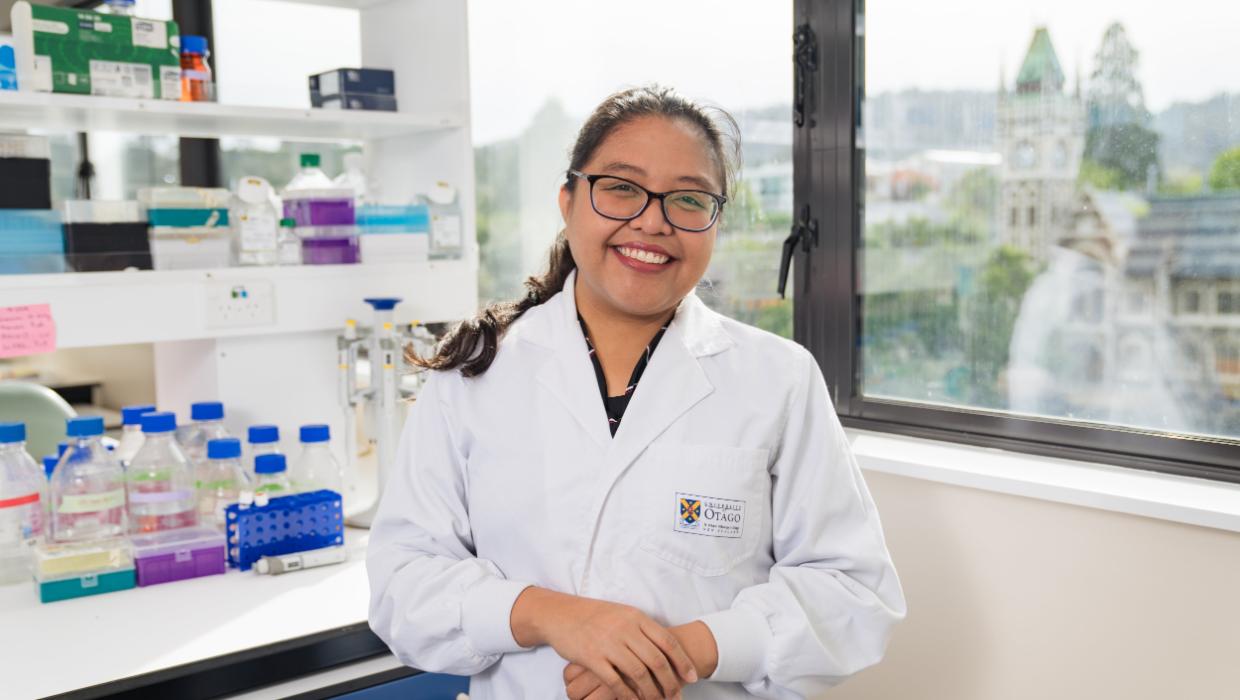
A significant breakthrough in cancer diagnosis may be on the horizon, thanks to the personal journey of a South Island researcher. Dr. Judy Ann Cocadiz, affiliated with the University of Otago, has secured a three-year, $300,000 post-doctoral fellowship from the Cancer Society. This funding supports her innovative research aimed at improving the accuracy of early-stage cancer detection.
Dr. Cocadiz’s work focuses on circulating tumour DNA (ctDNA), which consists of DNA fragments released into the bloodstream by cancer cells. The presence of ctDNA correlates with the severity of cancer; as cancer progresses, the level of ctDNA in the blood increases.
Innovative Device for Early Detection
Cocadiz is developing a novel device designed to be inserted into a blood vessel, functioning as a “sieve” to capture ctDNA for a brief period. This method could revolutionize how doctors detect cancers in their infancy and monitor for recurrence following treatment.
Currently, ctDNA analysis relies on blood samples of about 8-10 ml. Cocadiz explains the challenge: “In early-stage cancer, there is not a lot of ctDNA in 10 ml of blood. It is like looking for a needle in a haystack.” The proposed device aims to collect ctDNA more efficiently without the need for patients to provide larger blood samples, which can be uncomfortable and impractical, especially for children or frail individuals.
Instead of drawing more blood, the device would be inserted temporarily, allowing for ctDNA collection for a few minutes before removal. This approach could significantly enhance both the comfort and diagnostic accuracy for patients.
From Personal Experience to Professional Drive
Dr. Cocadiz’s passion for cancer research was ignited during her childhood in the Philippines. As a preschooler, she noticed that her best friend frequently had unexplained bruises. Concerned, she alerted her parents, who subsequently took her friend to the doctor. The child was diagnosed with early-stage leukemia and received timely treatment.
Years later, when she reunited with her friend, Cocadiz was relieved to find him healthy. This pivotal experience steered her away from a traditional medical career, directing her focus towards research that could alleviate the suffering of cancer patients. “Everything just kind of fell into place, and I am really glad I ended up in cancer research,” she reflected.
Currently, her research remains in the proof-of-concept stage, but Cocadiz is optimistic about its future applications. She acknowledges the essential role of the Cancer Society in her journey, stating, “I am so grateful for this grant because they are not just helping fund this research but essentially the early stages of my career as well.”
As Dr. Cocadiz continues her groundbreaking work, the potential for early and accurate cancer diagnosis becomes increasingly tangible, representing a beacon of hope for patients and families affected by this devastating disease.

Mel Eaton Celebrates First Solo Exhibition in Rangiora

Wellington Transit System Upgrades: Mobile Payments Replace Snapper Cards

Researcher Develops Innovative Cancer Detection Tool Fueled by Friendship

Alice Robinson Dominates Giant Slalom in Canada for Sixth Win

New Zealand Navy Monitored by Chinese Warships During Patrol

Business Owners Discuss Suburban Success and City Changes

Capture the Holiday Spirit with Santa Photos in Warkworth

Te Pāti Māori AGM Highlights Leadership Challenges and Unity

South Island Researcher Advances Cancer Diagnosis with Innovative Tool

Test Your Knowledge: Take the Herald’s Afternoon Quiz Today

PM Faces Backlash from Fans During Netball Trophy Ceremony

Dunedin Designers Win Top Award at Hokonui Fashion Event

Experience the Excitement of ‘Chief of War’ in Oʻahu

Liam Lawson Launches New Era for Racing Bulls with Strong Start

Coalition Forms to Preserve Māori Wards in Hawke’s Bay

Disney Fan Reveals Dress Code Tips for Park Visitors

Walking Faster Offers Major Health Benefits for Older Adults

Scots Rally with Humor and Music to Protest Trump’s Visit
-
 World4 months ago
Test Your Knowledge: Take the Herald’s Afternoon Quiz Today
-
 Sports4 months ago
PM Faces Backlash from Fans During Netball Trophy Ceremony
-
 Lifestyle4 months ago
Dunedin Designers Win Top Award at Hokonui Fashion Event
-
 Entertainment4 months ago
Experience the Excitement of ‘Chief of War’ in Oʻahu
-
 Sports4 months ago
Liam Lawson Launches New Era for Racing Bulls with Strong Start
-
 World5 months ago
Coalition Forms to Preserve Māori Wards in Hawke’s Bay
-
 Lifestyle4 months ago
Disney Fan Reveals Dress Code Tips for Park Visitors
-
 Health4 months ago
Walking Faster Offers Major Health Benefits for Older Adults
-
 Politics4 months ago
Scots Rally with Humor and Music to Protest Trump’s Visit
-

 Top Stories5 months ago
UK and India Finalize Trade Deal to Boost Economic Ties
-

 Health2 months ago
Radio Host Jay-Jay Feeney’s Partner Secures Visa to Stay in NZ
-

 World5 months ago
Huntly Begins Water Pipe Flushing to Resolve Brown Water Issue