
World
Government Urged to Address Structural Deficit Through Asset Recycling

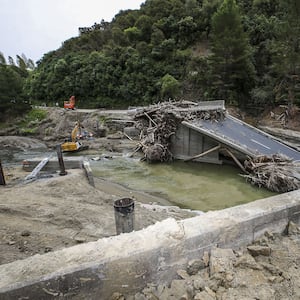
Former New Zealand Minister of State for State Owned Enterprises, Richard Prebble, has emphasized the urgent need for the Government to consider recycling state assets as a solution to a growing structural deficit. This financial challenge is compounded by increasing climate-related costs that threaten to impact public services and economic stability.
The call for action comes as the Government grapples with a deficit that has become more pronounced in recent years. Prebble argues that the effective management of state assets can not only bolster the economy but also address urgent climate challenges. He points out that failing to act could lead to severe consequences for both the economy and the environment.
Understanding the Structural Deficit
A structural deficit occurs when a government’s regular expenditures exceed its revenues, even during economic expansion. According to Prebble, the implications of this deficit are far-reaching. He highlights that without immediate and strategic action, critical public services may suffer, thereby affecting the overall quality of life for citizens.
The costs associated with climate change are becoming increasingly apparent, with experts predicting that expenditures related to climate adaptation and mitigation will continue to rise significantly. Prebble stresses that these costs need to be accounted for in the national budget. He believes that by recycling state assets, the Government can generate additional revenue, which could be redirected towards essential climate initiatives.
The Economic Case for Asset Recycling
Prebble’s perspective on asset recycling is grounded in the belief that state-owned enterprises, when managed effectively, can yield substantial economic benefits. He points to successful models from other countries where asset recycling has led to improved financial performance and enhanced public services.
For instance, countries like Australia have implemented asset recycling programs that not only raised funds for infrastructure projects but also revitalized struggling sectors. Prebble suggests that New Zealand could similarly benefit from a strategic approach to its state assets, particularly in sectors such as energy and transportation.
In practical terms, this could involve selling or leasing underperforming government assets, with the proceeds used to invest in more sustainable and profitable ventures. The resulting economic boost could help offset the financial strain posed by climate costs, while also promoting innovation and job creation.
Prebble’s arguments resonate with current economic realities, where governments worldwide are seeking innovative solutions to pressing fiscal challenges. As New Zealand navigates its financial landscape, the potential of asset recycling presents a viable path forward.
The discussion around state asset management and climate costs is set to intensify as the Government prepares its budget for the next fiscal year. Stakeholders across various sectors are encouraged to engage in this dialogue, as the implications of these decisions will shape the economic future of the country.
In conclusion, Richard Prebble urges the Government to take decisive action regarding its structural deficit, framing asset recycling not just as a financial strategy but as a vital necessity for sustainable growth and environmental stewardship. As the pressures of climate change mount, the time for a proactive approach is now.

Black Caps Face Injury Crisis Ahead of West Indies Series

Government Urged to Address Structural Deficit Through Asset Recycling

Black Caps Face Injury Crisis Ahead of West Indies Series

IKEA Surprised by High Demand After New Zealand Store Opening

Chappell Roan Becomes Global Ambassador for MAC Cosmetics in 2026

Jordan Dominates Egypt 3-0 to Secure Arab Cup Quarter-Final Spot

Black Caps Face Setback as Blair Tickner Injures Shoulder

Zuru Triumphs in Trademark Dispute Against Lego Over Product Label

Australia’s Social Media Ban Sparks Inquiry into Youth Safety in NZ

Test Your Knowledge: Take the Herald’s Afternoon Quiz Today

PM Faces Backlash from Fans During Netball Trophy Ceremony

Dunedin Designers Win Top Award at Hokonui Fashion Event

Experience the Excitement of ‘Chief of War’ in Oʻahu

Liam Lawson Launches New Era for Racing Bulls with Strong Start

Coalition Forms to Preserve Māori Wards in Hawke’s Bay

Walking Faster Offers Major Health Benefits for Older Adults

Disney Fan Reveals Dress Code Tips for Park Visitors

Scots Rally with Humor and Music to Protest Trump’s Visit
-
 World4 months ago
Test Your Knowledge: Take the Herald’s Afternoon Quiz Today
-
 Sports4 months ago
PM Faces Backlash from Fans During Netball Trophy Ceremony
-
 Lifestyle4 months ago
Dunedin Designers Win Top Award at Hokonui Fashion Event
-
 Entertainment5 months ago
Experience the Excitement of ‘Chief of War’ in Oʻahu
-
 Sports4 months ago
Liam Lawson Launches New Era for Racing Bulls with Strong Start
-
 World5 months ago
Coalition Forms to Preserve Māori Wards in Hawke’s Bay
-
 Health4 months ago
Walking Faster Offers Major Health Benefits for Older Adults
-
 Lifestyle4 months ago
Disney Fan Reveals Dress Code Tips for Park Visitors
-
 Politics4 months ago
Scots Rally with Humor and Music to Protest Trump’s Visit
-

 Top Stories5 months ago
UK and India Finalize Trade Deal to Boost Economic Ties
-

 Health2 months ago
Radio Host Jay-Jay Feeney’s Partner Secures Visa to Stay in NZ
-

 World5 months ago
Huntly Begins Water Pipe Flushing to Resolve Brown Water Issue