
Lifestyle
Rare ‘Good Shepherd’ Fresco of Jesus Discovered in Türkiye

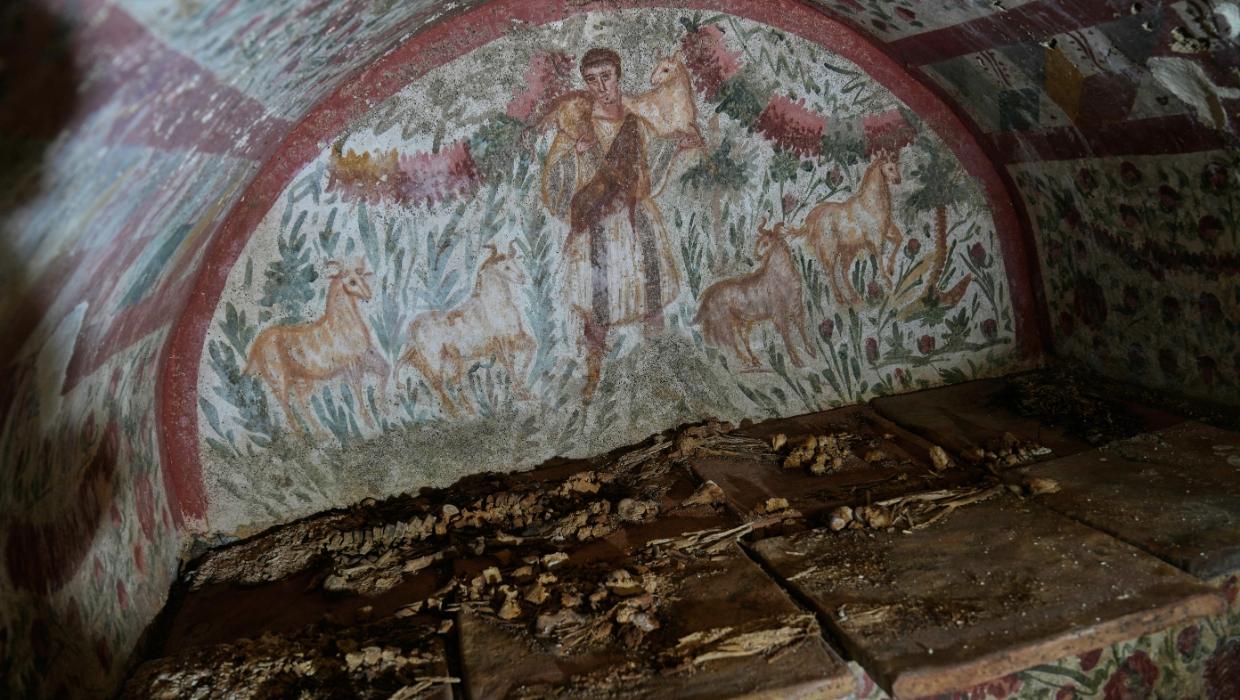
A rare fresco depicting Jesus as the “Good Shepherd” has been uncovered in an archaeological site in Türkiye. This significant find features a youthful, clean-shaven Jesus, dressed in a toga and carrying a goat across his shoulders. The discovery highlights the rich historical and artistic heritage of the region, offering new insights into early Christian iconography.
The fresco was discovered during ongoing excavations led by a team of archaeologists in the ancient city of Antioch, known for its historical significance in early Christianity. According to the head of the archaeological team, Dr. Ahmet Yılmaz, the fresco dates back to the **4th century** and is believed to be part of an ancient church structure. This timeline places the artwork in a critical period for the development of Christian art, making it an invaluable piece for scholars and historians alike.
Significance of the Discovery
The “Good Shepherd” motif has long been a symbol of Christ’s care for his followers. The depiction of Jesus in a youthful form conveys themes of hope and renewal. Dr. Yılmaz emphasized the uniqueness of this fresco, stating, “Finding such a well-preserved representation of Jesus from this era is rare. It provides critical context for understanding how early Christians visualized their faith.”
This fresco not only enriches the understanding of early Christian art but also demonstrates the cultural exchanges that occurred in the region during the **Roman Empire**. The style of the fresco showcases influences from both Roman artistic traditions and local artistic practices, reflecting a confluence of cultures that characterized the ancient city.
Future Implications and Preservation Efforts
As excavations continue, the archaeological team plans to implement measures to protect the fresco from environmental damage. The Turkish government has expressed support for the ongoing research and preservation efforts, recognizing the site’s potential for both academic study and tourism.
Local authorities are already considering the implications of this discovery for the cultural heritage of Türkiye. The fresco’s unveiling could attract scholars and tourists, enhancing the region’s reputation as a significant archaeological destination.
The preservation of such artifacts is crucial for future generations to appreciate the historical narratives they embody. As Dr. Yılmaz noted, “Every discovery like this adds a layer to our understanding of history. It connects us to our past and informs our present.”
This remarkable find underscores the importance of archaeological research in uncovering the stories of ancient civilizations. With continued exploration and preservation efforts, the “Good Shepherd” fresco will remain a testament to the artistic and theological developments of early Christianity.

Rare ‘Good Shepherd’ Fresco of Jesus Discovered in Türkiye

Young Person Escapes from Christchurch Youth Justice Facility

Study Reveals Small Glitches in Video Calls Impact Perceptions

Auckland FC Takes A-League Lead with Friday Night Victory

Fire Engulfs Frankton Golf Centre Clubhouse in Queenstown

Discover New Zealand’s Wildlife at Orokonui Ecosanctuary

Rare ‘Good Shepherd’ Fresco of Jesus Discovered in Türkiye

Young Person Escapes from Christchurch Youth Justice Facility

Minor Video Call Glitches Can Majorly Impact Trust and Judgments

Test Your Knowledge: Take the Herald’s Afternoon Quiz Today

PM Faces Backlash from Fans During Netball Trophy Ceremony

Tongan Star Eli Katoa Shares Recovery Update After Surgery

Dunedin Designers Win Top Award at Hokonui Fashion Event

Experience the Excitement of ‘Chief of War’ in Oʻahu

Liam Lawson Launches New Era for Racing Bulls with Strong Start

Coalition Forms to Preserve Māori Wards in Hawke’s Bay

Walking Faster Offers Major Health Benefits for Older Adults

Disney Fan Reveals Dress Code Tips for Park Visitors
-
 World5 months ago
Test Your Knowledge: Take the Herald’s Afternoon Quiz Today
-
 Sports5 months ago
PM Faces Backlash from Fans During Netball Trophy Ceremony
-
 Top Stories2 weeks ago
Tongan Star Eli Katoa Shares Recovery Update After Surgery
-
 Lifestyle5 months ago
Dunedin Designers Win Top Award at Hokonui Fashion Event
-
 Entertainment5 months ago
Experience the Excitement of ‘Chief of War’ in Oʻahu
-
 Sports5 months ago
Liam Lawson Launches New Era for Racing Bulls with Strong Start
-
 World5 months ago
Coalition Forms to Preserve Māori Wards in Hawke’s Bay
-
 Health5 months ago
Walking Faster Offers Major Health Benefits for Older Adults
-
 Lifestyle5 months ago
Disney Fan Reveals Dress Code Tips for Park Visitors
-

 Politics5 months ago
Scots Rally with Humor and Music to Protest Trump’s Visit
-

 Top Stories5 months ago
UK and India Finalize Trade Deal to Boost Economic Ties
-

 Health3 months ago
Radio Host Jay-Jay Feeney’s Partner Secures Visa to Stay in NZ