
Science
New Zealand Student to Showcase Innovative Science Project at US Fair

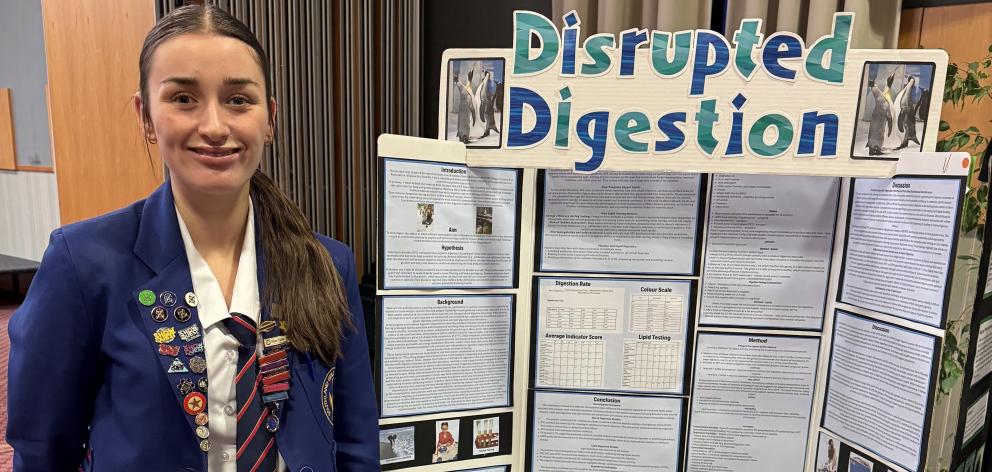
Seventeen-year-old Sophie Ineson has been chosen to represent New Zealand at the prestigious International Science and Engineering Fair in the United States in May 2024. Her project, titled “Disrupted Digestion,” was one of only two selected by judges from the Royal Society Te Apārangi out of seven submissions from regional science fairs across the country.
Sophie’s achievement comes on the heels of her recent win of the $50,000 Prime Minister’s Space Prize for Student Endeavour. This accolade was awarded for her innovative research on wound healing in space. Reflecting on her journey, Sophie described her earlier project about penguins, which she completed as part of the Duke of Edinburgh’s Hillary Award, as a pivotal moment that could lead to her participation in an international science fair.
While the selection still feels surreal to her, Sophie expressed her gratitude for the opportunity. Her interest in studying the impact of plastic on penguin digestion was sparked after witnessing a sick penguin at a sanctuary several years ago. “Penguins are also my favourite animal, so that really hit hard for me,” she said. “Looking at this poor little penguin who could hardly even walk, just because of eating a little tiny bit of plastic, was heartbreaking.”
Sophie’s research took a personal turn during a Spirit of Adventure sailing trip last year, where she observed the alarming amount of plastic pollution in the Hauraki Gulf. She noted, “I think that some people may not even consider how much of an impact maybe their plastic straw or just not disposing of the waste properly has on the penguins.”
In her experiments, Sophie investigated how different types of plastics affect the enzymes found in the stomachs of king penguins. She focused on using the enzymes lipase and amylase, which were safe and accessible for her research. The findings revealed that plastics do interfere with digestion, with the extent of interference varying based on the size, density, and chemical composition of the plastic.
To prepare for the upcoming international fair, Sophie will receive mentorship from a member of the Royal Society’s scientific review committee, ensuring her project meets the high standards expected at this global event.
Dame Jane Harding, president of the Royal Society Te Apārangi, emphasized the importance of science fairs in nurturing young talent. “Science and technology fairs offer students valuable opportunities to apply scientific investigation to real-world problems, while strengthening their critical thinking, creativity, and communication skills,” she stated.
Sophie Ineson’s journey reflects not only her dedication to scientific inquiry but also raises awareness about the environmental challenges facing wildlife. Her work stands as a testament to the potential impact young scientists can have on addressing pressing global issues.

South Canterbury Community Supports Invictus Team with New Trailer

Kiwi Couple Spends $60,000 to Escape Dubai Conflict Chaos

New $700,000 Investment Enhances Resilience of State Highway 2

1 Hotel Tokyo Opens, Blending Nature and Luxury in the City

WWE 2K26 Delivers Enhanced Gameplay Amid Monetization Concerns

David Seymour Advocates for Growth in Medicinal Cannabis Exports

TradeMe’s Selling Decision Sparks Debate Over Campground Costs

Government Considers Scrapping Clean Car Standard Amid Review

Kiwis Shine Early at Japan-Australasia Championship in Auckland

Lima Sopoaga Returns to New Zealand to Boost Waikato in NPC

Stabbing During Altercation Outside Mahia Rd Superette in Auckland

Test Your Knowledge: Take the Herald’s Afternoon Quiz Today

Experience the Excitement of ‘Chief of War’ in Oʻahu

PM Faces Backlash from Fans During Netball Trophy Ceremony

Tongan Star Eli Katoa Shares Recovery Update After Surgery

Dunedin Designers Win Top Award at Hokonui Fashion Event

Magda Szubanski Honoured at Logies Hall of Fame Ceremony

Liam Lawson Launches New Era for Racing Bulls with Strong Start
-
 Top Stories7 months ago
Lima Sopoaga Returns to New Zealand to Boost Waikato in NPC
-
 Top Stories4 months ago
Stabbing During Altercation Outside Mahia Rd Superette in Auckland
-
 World7 months ago
Test Your Knowledge: Take the Herald’s Afternoon Quiz Today
-
 Entertainment7 months ago
Experience the Excitement of ‘Chief of War’ in Oʻahu
-
 Sports7 months ago
PM Faces Backlash from Fans During Netball Trophy Ceremony
-
 Top Stories3 months ago
Tongan Star Eli Katoa Shares Recovery Update After Surgery
-
 Lifestyle7 months ago
Dunedin Designers Win Top Award at Hokonui Fashion Event
-
 Top Stories7 months ago
Magda Szubanski Honoured at Logies Hall of Fame Ceremony
-
 Sports7 months ago
Liam Lawson Launches New Era for Racing Bulls with Strong Start
-

 World7 months ago
Coalition Forms to Preserve Māori Wards in Hawke’s Bay
-

 Lifestyle7 months ago
Disney Fan Reveals Dress Code Tips for Park Visitors
-

 Health7 months ago
Walking Faster Offers Major Health Benefits for Older Adults