
Science
Researcher Develops Innovative Cancer Detection Tool Fueled by Friendship

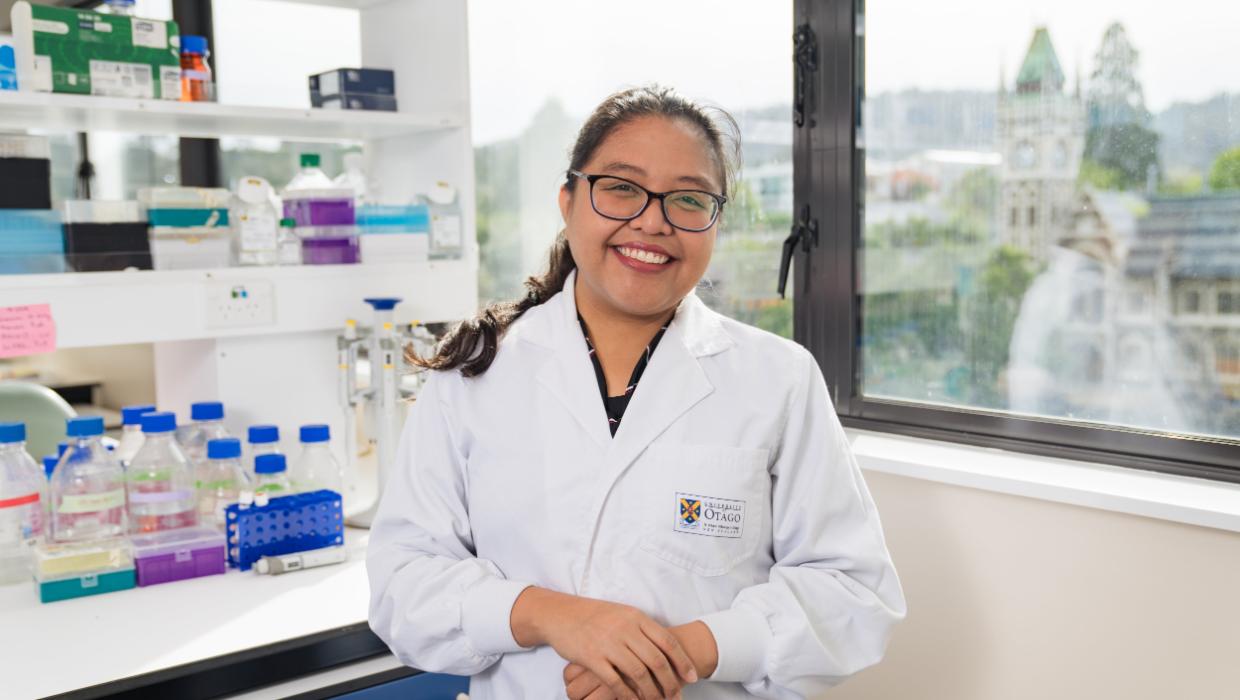
A personal experience has propelled South Island researcher Dr. Judy Ann Cocadiz into groundbreaking cancer research. Her childhood friend’s battle with cancer has inspired her to develop a revolutionary tool aimed at improving the early diagnosis of cancer. Recently, Cocadiz received a three-year, $300,000 post-doctoral fellowship from the Cancer Society as part of the 2025 National Research Grant Round, which will support her innovative work.
Cocadiz’s research focuses on circulating tumour DNA, or ctDNA, which consists of DNA fragments released into the bloodstream by cancer cells. The concentration of ctDNA correlates with cancer progression; hence, higher levels are found in advanced stages of the disease. Her goal is to create a small device that can be inserted into a blood vessel to act as a “sieve,” capturing ctDNA for short periods. This device could enable doctors to detect cancer even in its early stages and monitor patients for recurrence after treatment.
Current methods for ctDNA analysis involve drawing blood samples, typically between 8-10 milliliters. Cocadiz explained that early-stage cancer patients often have insufficient ctDNA in such small samples, which makes detection extremely challenging. “It is like looking for a needle in a haystack,” she remarked. Collecting larger blood volumes poses ethical and physical risks, particularly for vulnerable populations such as children and elderly patients. Her device aims to mitigate these concerns by collecting ctDNA more effectively without the need for extensive blood draws.
Although Cocadiz’s research is still in the proof-of-concept stage, the device is designed to function similarly to an IV, being inserted into a patient’s blood vessel in a manner akin to the use of a needle. While it may take years for the device to reach clinical use, Cocadiz remains optimistic about the direction of her research. She expressed gratitude for the support from the Cancer Society, noting that the fellowship is not only a financial boost for her research but also a critical step in her burgeoning career.
Cocadiz’s journey into cancer research began at a young age in the Philippines. At just five years old, she noticed that her best friend frequently had unexplained bruises. Concerned, she informed her parents, leading to a doctor’s visit that resulted in a diagnosis of early-stage leukaemia. Thanks to prompt treatment, her friend was able to recover. Reuniting with him earlier this year, Cocadiz was relieved to see him healthy and thriving.
After completing her PhD in biochemistry last year, Cocadiz realized that while she did not wish to become a doctor, she wanted to contribute significantly to the fight against cancer. “Everything just kind of fell into place,” she said, reflecting on her path into cancer research. With her dedication and innovative approach, Cocadiz is poised to make a meaningful impact in the field of oncology.

Mel Eaton Celebrates First Solo Exhibition in Rangiora

Wellington Transit System Upgrades: Mobile Payments Replace Snapper Cards

Researcher Develops Innovative Cancer Detection Tool Fueled by Friendship

Alice Robinson Dominates Giant Slalom in Canada for Sixth Win

New Zealand Navy Monitored by Chinese Warships During Patrol

Business Owners Discuss Suburban Success and City Changes

Capture the Holiday Spirit with Santa Photos in Warkworth

Te Pāti Māori AGM Highlights Leadership Challenges and Unity

South Island Researcher Advances Cancer Diagnosis with Innovative Tool

Test Your Knowledge: Take the Herald’s Afternoon Quiz Today

PM Faces Backlash from Fans During Netball Trophy Ceremony

Dunedin Designers Win Top Award at Hokonui Fashion Event

Experience the Excitement of ‘Chief of War’ in Oʻahu

Liam Lawson Launches New Era for Racing Bulls with Strong Start

Coalition Forms to Preserve Māori Wards in Hawke’s Bay

Disney Fan Reveals Dress Code Tips for Park Visitors

Walking Faster Offers Major Health Benefits for Older Adults

Scots Rally with Humor and Music to Protest Trump’s Visit
-
 World4 months ago
Test Your Knowledge: Take the Herald’s Afternoon Quiz Today
-
 Sports4 months ago
PM Faces Backlash from Fans During Netball Trophy Ceremony
-
 Lifestyle4 months ago
Dunedin Designers Win Top Award at Hokonui Fashion Event
-
 Entertainment4 months ago
Experience the Excitement of ‘Chief of War’ in Oʻahu
-
 Sports4 months ago
Liam Lawson Launches New Era for Racing Bulls with Strong Start
-
 World5 months ago
Coalition Forms to Preserve Māori Wards in Hawke’s Bay
-
 Lifestyle4 months ago
Disney Fan Reveals Dress Code Tips for Park Visitors
-
 Health4 months ago
Walking Faster Offers Major Health Benefits for Older Adults
-
 Politics4 months ago
Scots Rally with Humor and Music to Protest Trump’s Visit
-

 Top Stories5 months ago
UK and India Finalize Trade Deal to Boost Economic Ties
-

 Health2 months ago
Radio Host Jay-Jay Feeney’s Partner Secures Visa to Stay in NZ
-

 World5 months ago
Huntly Begins Water Pipe Flushing to Resolve Brown Water Issue