
Science
Researcher Develops Innovative Tool for Early Cancer Detection

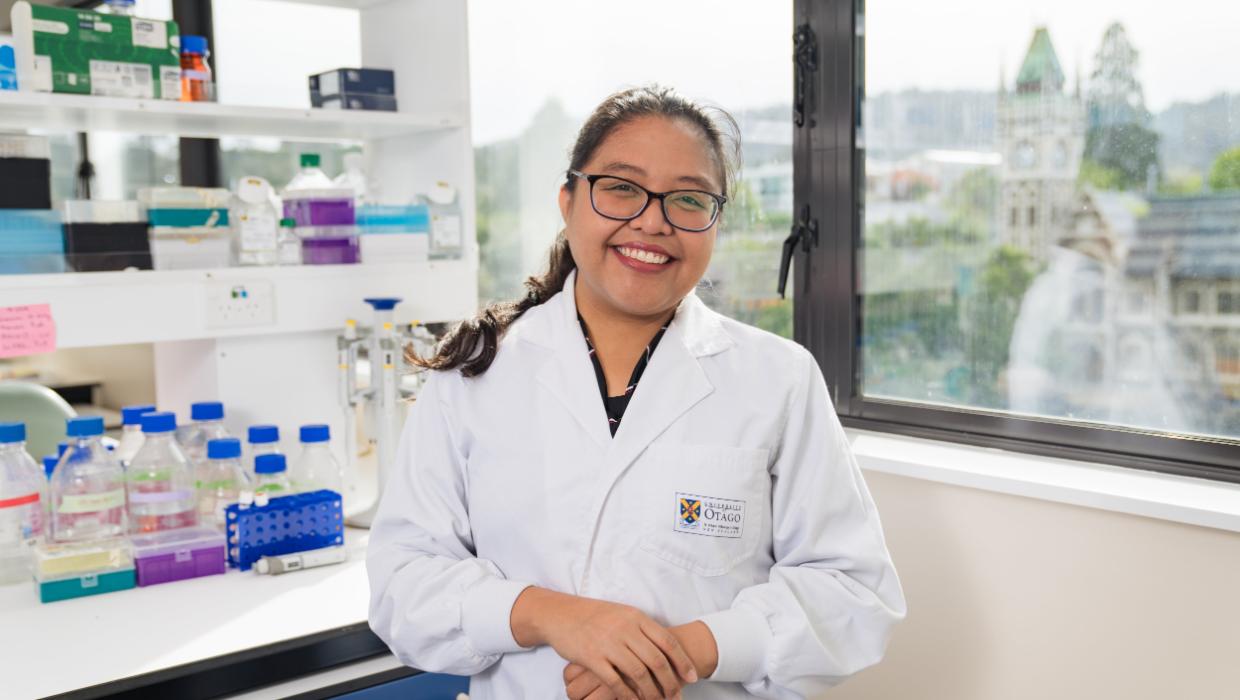
A childhood friend’s battle with cancer has inspired a South Island researcher to pursue groundbreaking advancements in cancer diagnosis. Dr. Judy Ann Cocadiz from the University of Otago has been awarded a three-year, $300,000 post-doctoral fellowship through the Cancer Society as part of the 2025 National Research Grant Round. This funding will support her innovative work on a new diagnostic tool aimed at improving the accuracy of early-stage cancer detection.
At the heart of Cocadiz’s research is circulating tumour DNA (ctDNA), which consists of DNA fragments released by cancer cells into the bloodstream. Typically, the level of ctDNA correlates with the progression of the disease; as cancer advances, the concentration of ctDNA increases. Cocadiz’s project aims to develop a small device that can be inserted into a blood vessel, functioning as a “sieve” to capture ctDNA over a brief period. This approach could facilitate earlier cancer detection and enable ongoing monitoring for any remaining or recurring cancer post-treatment.
Currently, ctDNA analysis relies on drawing a blood sample of approximately 8-10 millilitres. Cocadiz pointed out the limitations of this method, particularly in early-stage cancers where ctDNA levels are low. “It is like looking for a needle in a haystack,” she stated. The challenge lies in the ethical implications of taking larger blood samples from patients, which can be particularly concerning for children or those with health issues. The proposed device would minimize discomfort by collecting ctDNA without the need for excessive blood withdrawals, potentially transforming the diagnostic landscape.
Cocadiz’s device is still in the proof of concept stage, but she envisions it operating similarly to an intravenous (IV) line, allowing for straightforward insertion into a patient’s blood vessel. Although clinical implementation is likely years away, she remains optimistic about the potential impact of her research.
“I am so grateful for this grant from the Cancer Society,” Cocadiz remarked. “They are not just helping fund this research, but essentially supporting the early stages of my career as well.”
Cocadiz completed her PhD in biochemistry in 2022, motivated by a desire to contribute to the fight against cancer. Her interest was ignited during her childhood in the Philippines, when she noticed her preschool friend frequently suffered from unexplained bruises. After raising concerns with her parents, the friend was diagnosed with early-stage leukaemia and received prompt treatment. Reuniting with him earlier this year, Cocadiz was pleased to see him healthy and thriving.
Although she initially considered a career in medicine, Cocadiz ultimately chose to focus on cancer research. Reflecting on her journey, she stated, “Everything just kind of fell into place, and I am really glad I ended up in cancer research.” With the support of the Cancer Society and her own determination, she is poised to make significant contributions in the field of oncology.

US Federal Reserve Faces Divisions Over Interest Rate Cuts

Prince Harry Reflects on Royal Life with Humorous ‘Downton Abbey’ Comparison

McInnes Claims Qatar Off-Road Championship Title in Thrilling Finale

Challenge Your Vocabulary with Today’s Hard Word Quiz

Ngira Simmonds Critiques Leadership at Te Pāti Māori AGM

South Island Researcher Fights Cancer with Innovative Blood Test

One NZ Enhances Customer Service with 31 AI Agents

Kids Test Knowledge with Fun Kangaroo Quiz on December 7

Recognizing the Signs That Indicate You Need Iron Supplements

Test Your Knowledge: Take the Herald’s Afternoon Quiz Today

PM Faces Backlash from Fans During Netball Trophy Ceremony

Dunedin Designers Win Top Award at Hokonui Fashion Event

Experience the Excitement of ‘Chief of War’ in Oʻahu

Liam Lawson Launches New Era for Racing Bulls with Strong Start

Coalition Forms to Preserve Māori Wards in Hawke’s Bay

Walking Faster Offers Major Health Benefits for Older Adults

Disney Fan Reveals Dress Code Tips for Park Visitors

Scots Rally with Humor and Music to Protest Trump’s Visit
-
 World4 months ago
Test Your Knowledge: Take the Herald’s Afternoon Quiz Today
-
 Sports4 months ago
PM Faces Backlash from Fans During Netball Trophy Ceremony
-
 Lifestyle4 months ago
Dunedin Designers Win Top Award at Hokonui Fashion Event
-
 Entertainment4 months ago
Experience the Excitement of ‘Chief of War’ in Oʻahu
-
 Sports4 months ago
Liam Lawson Launches New Era for Racing Bulls with Strong Start
-
 World5 months ago
Coalition Forms to Preserve Māori Wards in Hawke’s Bay
-
 Health4 months ago
Walking Faster Offers Major Health Benefits for Older Adults
-
 Lifestyle4 months ago
Disney Fan Reveals Dress Code Tips for Park Visitors
-
 Politics4 months ago
Scots Rally with Humor and Music to Protest Trump’s Visit
-

 Top Stories5 months ago
UK and India Finalize Trade Deal to Boost Economic Ties
-

 Health2 months ago
Radio Host Jay-Jay Feeney’s Partner Secures Visa to Stay in NZ
-

 World5 months ago
Huntly Begins Water Pipe Flushing to Resolve Brown Water Issue