
Science
South Island Researcher Develops Innovative Tool for Cancer Detection

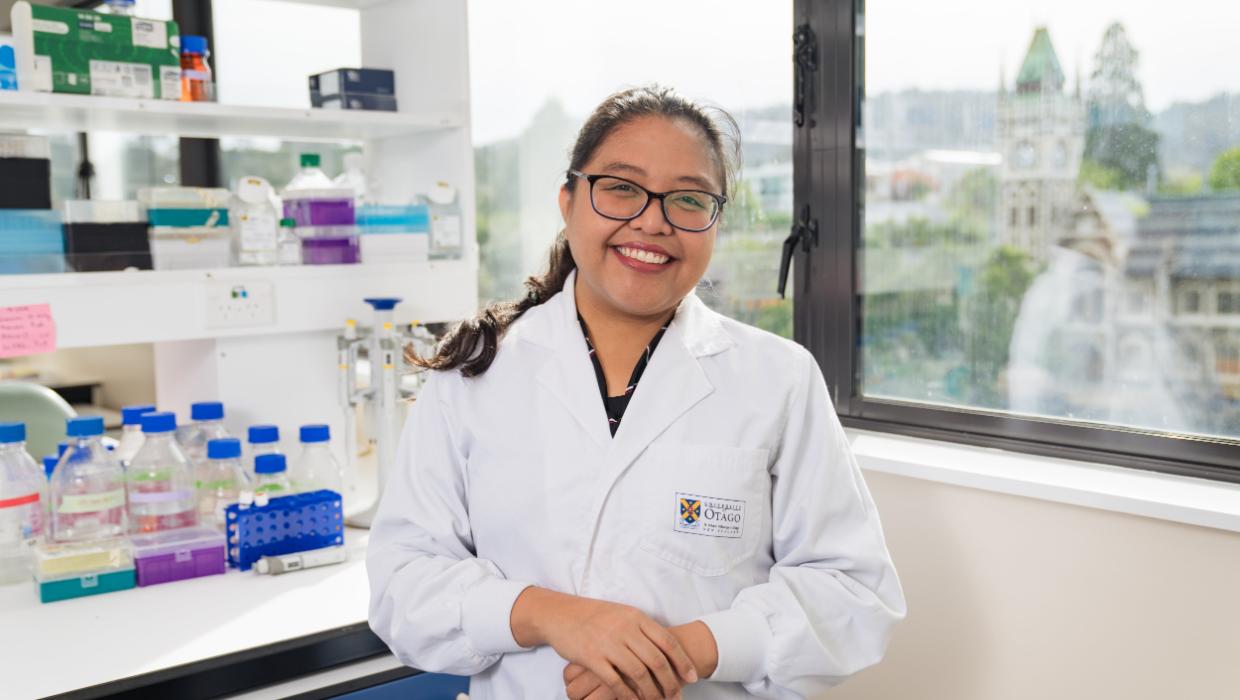
A South Island researcher is embarking on a promising journey to enhance cancer diagnosis through innovative technology inspired by a childhood friend’s experience with the disease. Dr. Judy Ann Cocadiz, affiliated with the University of Otago, has been awarded a three-year, $300,000 post-doctoral fellowship from the Cancer Society as part of its 2025 National Research Grant Round. This funding will support her development of a new tool aimed at improving the accuracy of cancer detection and monitoring.
Dr. Cocadiz’s research focuses on circulating tumour DNA (ctDNA), which are small fragments of DNA released by cancer cells into the bloodstream. The concentration of ctDNA tends to increase as cancer advances, making it a crucial marker for early detection.
To facilitate the collection of ctDNA, Cocadiz is working on a device designed to be inserted into a blood vessel, functioning as a “sieve” to capture ctDNA over a brief period. Unlike current methods that require drawing blood samples of approximately 8-10ml, which can be ineffective in the early stages of cancer, this new approach promises to gather a more substantial amount of ctDNA without the need for large blood draws.
“The challenge with early-stage cancer is that the amount of ctDNA present in a small blood sample is minimal,” Cocadiz explained. “It’s akin to searching for a needle in a haystack.” She emphasized that taking larger blood samples from patients, especially vulnerable populations like children or those with compromised health, raises ethical concerns.
The device, still in the proof-of-concept phase, is designed to operate similarly to an intravenous (IV) line, allowing for quick insertion and removal. Cocadiz expressed optimism about the potential of her research, stating, “I am really optimistic about where my research is heading.” The researcher also acknowledged the significant role of the grant, saying, “I am so grateful for this grant from the Cancer Society, because they are not just helping fund this research, but essentially the early stages of my career as well.”
Cocadiz’s interest in cancer research was sparked during her childhood in the Philippines. At just five years old, she noticed that her best friend often had unexplained bruises. Concerned for his health, she informed her parents, who then consulted a doctor. This led to her friend being diagnosed with early-stage leukaemia, enabling him to receive timely treatment. Meeting him again earlier this year, Cocadiz was thrilled to find him healthy and thriving.
After completing her PhD in biochemistry last year, Cocadiz initially considered a career in medicine but ultimately chose to focus on research as a means to contribute to the fight against cancer. Reflecting on her journey, she remarked, “Everything just kind of fell into place, and I am really glad I ended up in cancer research.”
As Dr. Cocadiz continues her groundbreaking work, the potential impact of her research could significantly improve the early diagnosis of cancer, potentially altering the landscape of oncology and patient care in the years to come.

Capture the Holiday Spirit with Santa Photos in Warkworth

Te Pāti Māori AGM Highlights Leadership Challenges and Unity

South Island Researcher Advances Cancer Diagnosis with Innovative Tool

Australia Claims Victory as England Faces Ashes Challenge

Investigation Launched After Chemical Burns at Christchurch Preschool

Police Arrest Suspect in Mt Wellington Homicide Case

Bank Reports Economic Recovery as Consumer Spending Surges

Matthew Lillard Responds to Quentin Tarantino’s Criticism of His Acting

Qatar Exits Arab Cup After 3-0 Defeat to Tunisia in Doha

Test Your Knowledge: Take the Herald’s Afternoon Quiz Today

PM Faces Backlash from Fans During Netball Trophy Ceremony

Dunedin Designers Win Top Award at Hokonui Fashion Event

Experience the Excitement of ‘Chief of War’ in Oʻahu

Liam Lawson Launches New Era for Racing Bulls with Strong Start

Coalition Forms to Preserve Māori Wards in Hawke’s Bay

Walking Faster Offers Major Health Benefits for Older Adults

Disney Fan Reveals Dress Code Tips for Park Visitors

Scots Rally with Humor and Music to Protest Trump’s Visit
-
 World4 months ago
Test Your Knowledge: Take the Herald’s Afternoon Quiz Today
-
 Sports4 months ago
PM Faces Backlash from Fans During Netball Trophy Ceremony
-
 Lifestyle4 months ago
Dunedin Designers Win Top Award at Hokonui Fashion Event
-
 Entertainment4 months ago
Experience the Excitement of ‘Chief of War’ in Oʻahu
-
 Sports4 months ago
Liam Lawson Launches New Era for Racing Bulls with Strong Start
-
 World5 months ago
Coalition Forms to Preserve Māori Wards in Hawke’s Bay
-
 Health4 months ago
Walking Faster Offers Major Health Benefits for Older Adults
-
 Lifestyle4 months ago
Disney Fan Reveals Dress Code Tips for Park Visitors
-
 Politics4 months ago
Scots Rally with Humor and Music to Protest Trump’s Visit
-

 Top Stories5 months ago
UK and India Finalize Trade Deal to Boost Economic Ties
-

 Health2 months ago
Radio Host Jay-Jay Feeney’s Partner Secures Visa to Stay in NZ
-

 World5 months ago
Huntly Begins Water Pipe Flushing to Resolve Brown Water Issue