
World
Google and Apple Blur Iconic Dominion Road Boy Sculpture

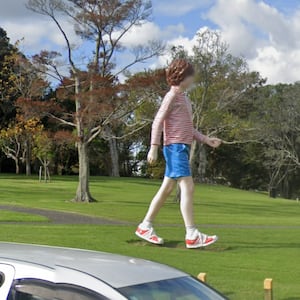
A sculpture in Tāmaki Makaurau, known as the Dominion Road Boy, has had its face blurred on Google and Apple Maps. This decision brings to light the unintended consequences of artificial intelligence (AI) automation in technology. The artwork, created by artist Ronnie van Hout, was installed in Potters Park in 2019 and has since become a beloved local landmark.
The blurring of the sculpture’s face occurs as part of a standard privacy measure implemented by both tech giants. Typically, this practice is applied to real people featured in street-view images to protect their identities. Commenting on the situation, technology expert and founder of Gorilla Technology, Paul Spain, stated that the alteration underscores the limitations of AI technology. He suspects that the decision to censor the artwork was made by a computer algorithm rather than a conscious choice by an individual.
Art Meets Automation
The incident raises important questions about the intersection of art and technology. The blurring of the Dominion Road Boy raises concerns about how automated systems interpret and interact with creative works. As AI continues to evolve and permeate various aspects of daily life, its impact on cultural landmarks and public art becomes increasingly significant.
According to Stuff, Spain pointed out that this situation highlights the challenges faced by AI in understanding context and the nuances of human creativity. The algorithm’s inability to differentiate between a sculpture and a human being suggests a need for more sophisticated programming in technology.
Local Impact and Reactions
The blurred image of the sculpture has drawn mixed reactions from the community and art enthusiasts alike. For many, the Dominion Road Boy is more than just a piece of art; it represents a connection to the city’s identity. The alteration has sparked discussions about the role of technology in preserving cultural heritage and the importance of human oversight in automated processes.
As cities around the world increasingly integrate technology into public spaces, the implications of such actions will likely resonate beyond Tāmaki Makaurau. Artists and local communities may find themselves at a crossroads, navigating the balance between technological advancements and the preservation of artistic integrity.
In an era where technology shapes how we experience and interact with our surroundings, incidents like the blurring of the Dominion Road Boy serve as a reminder of the need for thoughtful consideration of the tools we employ. As the conversation continues, it remains essential to reflect on how such automated decisions affect not only art but also the broader cultural landscape.

Long-Lost Rubens Painting Fetches €2.94 Million at Auction

Investigation Continues into Andrew Coster as Agency Progresses

Legendary Rugby Players to Clash in Anzac Day Classic Match

Get Financially Fit for 2026: Strategies to Tackle Debt

Swiss National Pleads Guilty in Fatal Canterbury Crash

One NZ Fined $1.1 Million for Breaching Emergency Call Standards

Challenge Your Mind: Solve Today’s Hard Word Puzzle in 60 Seconds

Lusail Circuit Engages F1 Leaders to Enhance Motorsport Collaboration

Long-Lost Rubens Painting Fetches €2.94 Million at Auction

Test Your Knowledge: Take the Herald’s Afternoon Quiz Today

PM Faces Backlash from Fans During Netball Trophy Ceremony

Dunedin Designers Win Top Award at Hokonui Fashion Event

Liam Lawson Launches New Era for Racing Bulls with Strong Start

Experience the Excitement of ‘Chief of War’ in Oʻahu

Coalition Forms to Preserve Māori Wards in Hawke’s Bay

Disney Fan Reveals Dress Code Tips for Park Visitors

Walking Faster Offers Major Health Benefits for Older Adults

Scots Rally with Humor and Music to Protest Trump’s Visit
-
 World4 months ago
Test Your Knowledge: Take the Herald’s Afternoon Quiz Today
-
 Sports4 months ago
PM Faces Backlash from Fans During Netball Trophy Ceremony
-
 Lifestyle4 months ago
Dunedin Designers Win Top Award at Hokonui Fashion Event
-
 Sports4 months ago
Liam Lawson Launches New Era for Racing Bulls with Strong Start
-
 Entertainment4 months ago
Experience the Excitement of ‘Chief of War’ in Oʻahu
-
 World4 months ago
Coalition Forms to Preserve Māori Wards in Hawke’s Bay
-
 Lifestyle4 months ago
Disney Fan Reveals Dress Code Tips for Park Visitors
-
 Health4 months ago
Walking Faster Offers Major Health Benefits for Older Adults
-
 Politics4 months ago
Scots Rally with Humor and Music to Protest Trump’s Visit
-

 Top Stories4 months ago
UK and India Finalize Trade Deal to Boost Economic Ties
-

 Health2 months ago
Radio Host Jay-Jay Feeney’s Partner Secures Visa to Stay in NZ
-
 World4 months ago
Huntly Begins Water Pipe Flushing to Resolve Brown Water Issue