
Politics
Trump Boycotts G20 Summit, Casting Shadow on South Africa’s Milestone

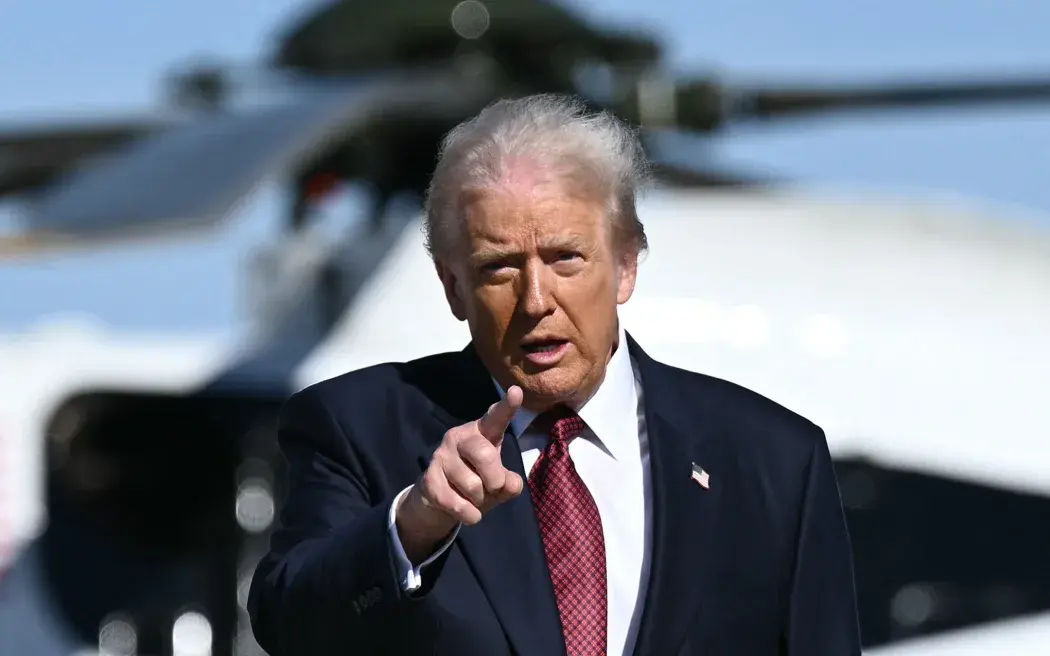
The upcoming G20 summit in Johannesburg, South Africa, is overshadowed by the decision of former United States President Donald Trump to boycott the event. This summit, which marks the first time the G20 is being hosted on African soil, was intended as a significant opportunity for South Africa to showcase its leadership in global affairs. The tensions between Trump and South African President Cyril Ramaphosa have escalated dramatically, originating from a controversial meeting in the Oval Office nine months ago.
During that meeting, Trump played a video alleging that white South African farmers were being persecuted. He presented newspaper articles backing these claims, which have been widely debunked. Ramaphosa, who rejects these allegations, remained silent while Trump made his assertions. Elon Musk, known for his vocal support of these claims, was also present. Trump’s refusal to withdraw these statements culminated in his recent declaration on social media that it was a “disgrace” for South Africa to host the G20.
In response to Trump’s comments, Ramaphosa bluntly stated, “Their loss,” reflecting the potential ramifications of Trump’s absence on the summit’s ability to address pressing global issues, including climate resilience, clean energy transition, debt relief, and equitable access to critical minerals. The absence of the US president raises concerns about the possibility of reaching a consensus for the traditional final declaration of the summit.
Global Context and Notable Absences
The G20 summit, which comprises 19 major industrial nations and the European Union, represents approximately 85 percent of global GDP and two-thirds of the world’s population. Trump’s decision to boycott is compounded by the absence of other notable leaders. Argentine President Javier Milei, a Trump ally, is also staying away for ideological reasons. Russian President Vladimir Putin will not attend due to an arrest warrant from the International Criminal Court, and China is sending Premier Li Qiang instead of President Xi Jinping.
In a striking development, the US is not sending any government representatives to the summit. Trump confirmed this via social media, stating, “No US Government Official will attend as long as these Human Rights abuses continue,” referring to the same debunked claims about white farmers.
Australia’s involvement in the G20 is significant, with former Prime Minister Kevin Rudd playing a pivotal role in establishing the meeting in 2008 to coordinate responses to the Global Financial Crisis and advance climate change discussions. This has granted Australia a vital position in global economic policy-making. Current Prime Minister Anthony Albanese, while traveling to Johannesburg for the summit, emphasized the G20’s relevance, despite the absence of the US and Chinese presidents. He indicated plans for bilateral meetings with leaders from India, South Korea, and Japan, reinforcing Australia’s commitment as a middle power.
Implications for Multilateralism
The ramifications of Trump’s absence extend beyond the immediate summit. Former Department of Foreign Affairs Secretary Peter Varghese commented that the best Australia can hope for in multilateral forums like the G20 is to “save the furniture.” He pointed to Trump’s historically unilateral approach and skepticism towards multilateral organizations, underlining the challenges facing global diplomacy in the current climate.
Australian Treasurer Jim Chalmers highlighted the G20 as a platform for leaders to foster confidence amid rising global economic uncertainty. He noted that while the world has navigated recent trade tensions better than anticipated, significant risks and volatility remain. “This strikes me as the most important thing for the G20 leaders to focus on,” Chalmers remarked.
As the summit concludes on September 10, 2023, Ramaphosa will be tasked with handing over the G20 presidency to the next host, who will be Trump. Ramaphosa expressed his discomfort with this transition, stating, “I don’t want to hand over to an empty chair, but the empty chair will be there.” His comments reflect the broader implications of leadership dynamics on the global stage, particularly in a context where South Africa is confronting its own complex historical legacies.
In summary, Trump’s boycott of the G20 summit not only highlights existing tensions between the US and South Africa but also raises significant questions about the future of multilateralism and international cooperation in addressing global challenges.

Long-Lost Rubens Painting Fetches €2.94 Million at Auction

Investigation Continues into Andrew Coster as Agency Progresses

Legendary Rugby Players to Clash in Anzac Day Classic Match

Get Financially Fit for 2026: Strategies to Tackle Debt

Swiss National Pleads Guilty in Fatal Canterbury Crash

One NZ Fined $1.1 Million for Breaching Emergency Call Standards

Challenge Your Mind: Solve Today’s Hard Word Puzzle in 60 Seconds

Lusail Circuit Engages F1 Leaders to Enhance Motorsport Collaboration

Long-Lost Rubens Painting Fetches €2.94 Million at Auction

Test Your Knowledge: Take the Herald’s Afternoon Quiz Today

PM Faces Backlash from Fans During Netball Trophy Ceremony

Dunedin Designers Win Top Award at Hokonui Fashion Event

Liam Lawson Launches New Era for Racing Bulls with Strong Start

Experience the Excitement of ‘Chief of War’ in Oʻahu

Coalition Forms to Preserve Māori Wards in Hawke’s Bay

Disney Fan Reveals Dress Code Tips for Park Visitors

Walking Faster Offers Major Health Benefits for Older Adults

Scots Rally with Humor and Music to Protest Trump’s Visit
-
 World4 months ago
Test Your Knowledge: Take the Herald’s Afternoon Quiz Today
-
 Sports4 months ago
PM Faces Backlash from Fans During Netball Trophy Ceremony
-
 Lifestyle4 months ago
Dunedin Designers Win Top Award at Hokonui Fashion Event
-
 Sports4 months ago
Liam Lawson Launches New Era for Racing Bulls with Strong Start
-
 Entertainment4 months ago
Experience the Excitement of ‘Chief of War’ in Oʻahu
-
 World4 months ago
Coalition Forms to Preserve Māori Wards in Hawke’s Bay
-
 Lifestyle4 months ago
Disney Fan Reveals Dress Code Tips for Park Visitors
-
 Health4 months ago
Walking Faster Offers Major Health Benefits for Older Adults
-
 Politics4 months ago
Scots Rally with Humor and Music to Protest Trump’s Visit
-
 Top Stories4 months ago
UK and India Finalize Trade Deal to Boost Economic Ties
-

 Health2 months ago
Radio Host Jay-Jay Feeney’s Partner Secures Visa to Stay in NZ
-
 World4 months ago
Huntly Begins Water Pipe Flushing to Resolve Brown Water Issue