
Politics
Maipi-Clarke Surges Ahead in Leadership Poll for Te Pāti Māori

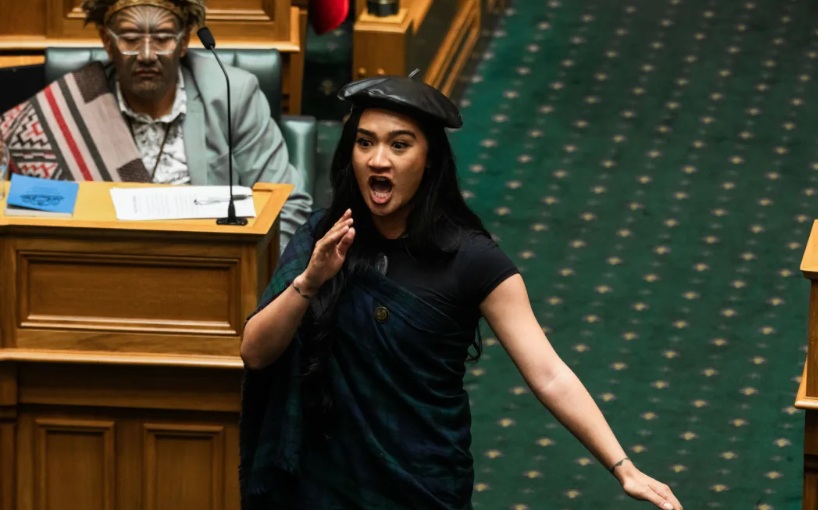
A recent poll reveals that nearly half of Māori voters lack trust in the leadership of Te Pāti Māori, with many expressing support for Hana-Rawhiti Maipi-Clarke as a potential leader. Conducted by Mata-Horizon Research, the survey indicates significant dissatisfaction, with 47 percent of respondents believing the party is moving in the wrong direction. The findings also highlight that over 65 percent of those surveyed consider recent party issues as important factors influencing their voting decisions.
The poll is part of a broader examination titled *Te Pāti Māori: A Kaupapa in Crisis*, which scrutinizes the internal challenges faced by the party this year. Since June, Te Pāti Māori has encountered a series of setbacks, including allegations and counter-allegations among its members, culminating in the expulsion of Mariameno Kapa-Kingi and Tākura Ferris. A recent interim order from the High Court has temporarily reinstated Kapa-Kingi’s membership, pending a full hearing scheduled for next year.
Internal Strife and Historical Context
Discontent among former party insiders has surfaced, with calls for a return to the foundational principles established when Te Pāti Māori was founded in 2004. Amokura Panoho, a founding member, emphasized that these principles were intended to reflect the political aspirations and behaviors expected from the party. She expressed concern that changes made to the constitution in 2023 shifted authority away from the membership to the executive.
Jack Tautokai McDonald, the former policy director, acknowledged the party’s accomplishments since its return to Parliament in 2020 but warned that recent turmoil risks undermining those achievements. “I feel like that is now all at risk because of the debacle over the last few months,” he stated.
Mata Reports invited party president John Tamihere to share his insights but he declined the opportunity.
Polling Insights and Future Implications
The Mata-Horizon Research Poll surveyed 328 Māori voters from December 4-12, with a margin of error of ±5.4 percent. Among respondents, 47 percent expressed limited trust in the current leadership team, stating they had “not much” or “none” at all. A further breakdown showed that 26 percent had “some” trust, while only 18 percent reported having “a lot.”
In terms of preferred leadership, Maipi-Clarke emerged as the top choice, garnering 19 percent support. The Hauraki-Waikato MP is recognized as the youngest member of Parliament and was recently named one of the world’s most influential rising stars by *Time* magazine. Co-leader Rawiri Waititi followed with 12 percent, while Ferris received 11 percent. Other figures in the poll included co-leader Debbie Ngarewa-Packer at 7 percent, Kapa-Kingi at 6 percent, Tamihere at 5 percent, and Oriini Kaipara at 3 percent, with 37 percent of respondents uncertain or selecting “other.”
Despite the challenges, the party’s electoral support remains relatively stable. Te Pāti Māori won six out of seven Māori electorate seats in the last election and enjoyed strong polling at the start of this year, aided by the Toitū Te Tiriti movement, which opposed the Treaty Principles Bill.
However, the recent internal conflicts have raised concerns about their potential impact on voter choices in the upcoming election. When asked about the importance of recent issues in determining their vote, 67 percent of respondents indicated these problems were “very” or “somewhat” important. Only 27 percent viewed them as “not very important” or “not important at all.”
Political scientist Lara Greaves from Victoria University commented on the party’s uncertain path back to stability. “I don’t know where things can go from here and how they can bounce back,” she stated. The split with the Toitū Te Tiriti movement, in particular, poses a risk of alienating younger voters. “It’s hard to motivate people to come out to vote when you see all of this drama,” she noted.
Despite the turmoil, Panoho expressed optimism about the party’s future, stating, “If we return to honesty, integrity and collective leadership, our movement will recover its mana.” She emphasized the importance of stabilizing the kaupapa to inspire young leaders to advance the party’s mission.
As Te Pāti Māori navigates these turbulent waters, the upcoming election will serve as a crucial test of its ability to retain voter trust and support.

Jo Cribb Highlights Best Wines of 2025 with Unique Choices

Maipi-Clarke Surges Ahead in Leadership Poll for Te Pāti Māori

Researchers Decode Genetic Secrets of Holstein Cattle Coat Patterns

West Indies Rally Strongly in Response to New Zealand’s 575

David Seymour’s Car Struck by Tree in Epsom Car Park Incident

West Indies Openers Shine in Chase Against New Zealand

Jo Cribb Unveils Top Wine Picks for 2025 in Final Column

Poll Reveals Maipi-Clarke Preferred Over Te Pāti Māori Leaders

Scientists Decode Genetic Secrets Behind Holstein Cow Spots

Test Your Knowledge: Take the Herald’s Afternoon Quiz Today

PM Faces Backlash from Fans During Netball Trophy Ceremony

Tongan Star Eli Katoa Shares Recovery Update After Surgery

Dunedin Designers Win Top Award at Hokonui Fashion Event

Experience the Excitement of ‘Chief of War’ in Oʻahu

Liam Lawson Launches New Era for Racing Bulls with Strong Start

Walking Faster Offers Major Health Benefits for Older Adults

Coalition Forms to Preserve Māori Wards in Hawke’s Bay

Disney Fan Reveals Dress Code Tips for Park Visitors
-
 World5 months ago
Test Your Knowledge: Take the Herald’s Afternoon Quiz Today
-
 Sports5 months ago
PM Faces Backlash from Fans During Netball Trophy Ceremony
-
 Top Stories3 weeks ago
Tongan Star Eli Katoa Shares Recovery Update After Surgery
-
 Lifestyle5 months ago
Dunedin Designers Win Top Award at Hokonui Fashion Event
-
 Entertainment5 months ago
Experience the Excitement of ‘Chief of War’ in Oʻahu
-
 Sports5 months ago
Liam Lawson Launches New Era for Racing Bulls with Strong Start
-
 Health5 months ago
Walking Faster Offers Major Health Benefits for Older Adults
-
 World5 months ago
Coalition Forms to Preserve Māori Wards in Hawke’s Bay
-
 Lifestyle5 months ago
Disney Fan Reveals Dress Code Tips for Park Visitors
-

 Politics5 months ago
Scots Rally with Humor and Music to Protest Trump’s Visit
-

 Top Stories5 months ago
UK and India Finalize Trade Deal to Boost Economic Ties
-

 Health3 months ago
Radio Host Jay-Jay Feeney’s Partner Secures Visa to Stay in NZ